

Table of Contents
- Buying Dubai Property With Cryptocurrency: The Short Answer
- Who Regulates Buying Dubai Property With Cryptocurrency
- Three Routes for Buying Dubai Property With Cryptocurrency
- Which Route Fits an International Buyer
- Source of Funds When Buying Dubai Property With Cryptocurrency
- What Can Go Wrong When Buying Dubai Property With Cryptocurrency
- Home-Country Tax on Crypto Spent on Dubai Property
- Seven Checks Before Buying Dubai Property With Cryptocurrency
- Limits of This Article
- FAQ
- Your Next Step
Buying Dubai Property With Cryptocurrency: The Short Answer
Buying Dubai property with cryptocurrency is possible, but the label is misleading. The crypto is the source of your money. It is not the currency of the deal. Press reports say a licensed intermediary converts the coins into dirhams before the property is registered, and the title deed shows the price in dirhams.
So the real question is not “is it allowed?”. It is: who converts, at what price, with whose licence, and what paper trail will exist afterwards? Most of the risk sits in those four answers, not in the blockchain.
My view is direct. For most foreign buyers, converting through a licensed provider into your own bank account, then paying in dirhams, is the cleaner route. Paying through a developer’s crypto processor can work, but only when the contract, the licence and the refund terms are all clear in writing.
- Fact: crypto is converted into dirhams through a licensed intermediary before registration (Gulf News explainer on crypto payments in the UAE).
- Fact: the DLD’s agreement with Crypto.com is about virtual real estate and exploring digital currencies, not a ready-made payment channel (Dubai Media Office announcement of the DLD agreement with Crypto.com).
- Opinion: convert first, then pay in dirhams, unless the developer’s crypto route is fully documented.
Who Regulates Buying Dubai Property With Cryptocurrency
There is no single regulator for the whole transaction, which is why buyers get confused. Three layers matter.
The property layer. The Dubai Land Department registers the sale and records value in dirhams. On 6 July 2025 it signed a memorandum of cooperation with Crypto.com to develop a digital investment environment for virtual real estate assets and to explore the use of digital currencies in property transactions. The same announcement says it follows Dubai’s plan to allow government fees to be paid in digital currencies. Read it as direction of travel, not as an instruction manual for a buyer today.
The crypto layer. VARA publishes a VARA public register of virtual asset service providers that are fully licensed or hold an in-principle approval. The register itself says an in-principle approval is only a conditional step, and that holders may not start operations or serve clients until the full licence is issued. That one sentence is a useful filter: a provider that calls itself “approved” is not necessarily licensed.
The payments layer. Under Federal Decree-Law No. 6 of 2025, the Central Bank of the UAE licenses payment services that use virtual assets, while other virtual asset activities sit with the Capital Market Authority. Clyde & Co’s note of 30 September 2026 explains how that split works after the Capital Market Authority’s 2026 resolutions. For you, the practical point is simple: ask which regulator licenses the firm that will convert your coins, and for which activity.
Three Routes for Buying Dubai Property With Cryptocurrency
In practice, buyers use one of three routes. They are not equal.
| Route | How it works | Main advantage | Main risk |
|---|---|---|---|
| 1. Convert yourself, pay by bank transfer | You sell the crypto through a licensed provider, receive dirhams or another currency in your bank account, then pay the seller as in any purchase | The seller sees a normal bank payment; your documents are in your own name | Your bank may question a large crypto-origin deposit; timing between conversion and payment |
| 2. Pay through the developer’s crypto processor | You send crypto to a licensed provider chosen by the developer, which converts it and pays the developer in dirhams | Fewer steps; the developer has accepted this route | Fixing the rate, refund currency, and relying on a provider you did not choose |
| 3. Use a broker or OTC desk as the middleman | An agent or desk takes your crypto and arranges the payment | Convenience for large amounts | Most scam exposure; an unlicensed intermediary can mean lost funds |
Khaleej Times describes route two in these terms: the buyer sends crypto to a licensed over-the-counter desk or an approved payment provider, where it is converted into dirhams, and the developer receives local currency. The same report warns that using unlicensed brokers or exchanges raises the risk of losing funds. See the Khaleej Times report on crypto-backed property purchases for the full discussion.
If you are comparing options before choosing a developer or an area, our real estate advisory service can help you set the payment route alongside the property decision, so one does not undermine the other.
Which Route Fits an International Buyer
Here is how I would reason about it, using the engineering sequence: problem, cause, options, trade-off, recommendation.
Problem. You hold value in crypto and want a dirham-priced asset with a registered title. Cause of friction. The property market, the banks and the registry all run on dirhams and on KYC files, not on wallet addresses. Trade-off. Route one is slower and exposes you to market movement for a few days, but you control every document. Route two is faster, but you accept the developer’s provider, rate and refund terms.
Recommendation (opinion). Choose route one for ready property and for any purchase above what you would comfortably lose in a rate dispute. Consider route two only when the developer names its licensed provider in the contract, fixes the price in dirhams, states the conversion time and rate, and explains refunds. Avoid route three unless the intermediary appears on the VARA register for the right activity and you can verify it yourself.
If the purchase is off-plan, the choice carries more weight, because you will pay in instalments over months or years. Each instalment is a new conversion and a new exposure. Our guide on how to stress-test the payment plan before you sign applies with extra force here.
Source of Funds When Buying Dubai Property With Cryptocurrency
The compliance burden does not shrink because the money started as crypto. It grows. A bank, developer or licensed provider will want to know how you acquired the coins, not just that you hold them. Khaleej Times reports that buyers face strict KYC and AML checks.
Prepare the story before anyone asks. A buyer who can show an exchange statement, the on-chain history of the funds and a plain explanation of how they were earned gets through quickly. A buyer who cannot explain a deposit that arrived from a mixer or an unknown wallet will not. Our guide to moving money to the UAE covers the source-of-funds versus source-of-wealth distinction and the document pack in more detail.
- Exchange records: account statements and withdrawal history from the platform you used.
- Wallet evidence: proof that you control the wallet that sends the funds, and the path of the coins.
- Origin documents: evidence of how you acquired them, such as salary, business income, or the sale of an earlier asset.
- Identity and address: the standard documents for you and any co-buyer or company.
What Can Go Wrong When Buying Dubai Property With Cryptocurrency
Most failures I would expect fall into four groups, and none needs bad luck to happen.
| Risk | What it looks like | How to reduce it |
|---|---|---|
| Price movement | The coin falls between agreeing the price and paying; a dirham price now needs more coins | Fix the conversion time and rate in writing; convert early for the amount due |
| Unlicensed intermediary | An agent or desk takes the coins and the payment never reaches the developer | Check the VARA register; never pay a personal wallet |
| Refund and cancellation | An off-plan cancellation or delay is settled in dirhams, not the coins you sent | Ask the refund currency and account before signing; see delayed handover |
| Resale | A future buyer may not accept crypto and may question the origin of funds | Keep your own conversion records so your purchase history is clear |
Khaleej Times quotes experts on two of these points: volatility can create uncertainty for both buyers and developers, especially in off-plan or staggered payments, and developer acceptance remains limited. Both match what I would expect from the structure of the deal.
There is also a trap that has nothing to do with crypto. Paying with crypto does not change the fees around the transaction. Registration charges, agency commission and service charges still apply, so see what buying property in Dubai really costs before you set your budget. And do your developer due diligence on the developer as you would for any purchase: a crypto payment option says nothing about build quality or delivery history.
Home-Country Tax on Crypto Spent on Dubai Property
The UAE side is only half the picture. Where you are tax resident decides whether spending crypto is a taxable event for you. I cannot give you a rule for every country, and I will not guess at yours. I can show the pattern with one verified example.
In the United Kingdom, HMRC guidance on selling cryptoassets says you may need to pay Capital Gains Tax when you dispose of cryptoasset tokens by selling them, exchanging them, or using them to pay for goods or services. Under that guidance, funding a property purchase with coins that have risen in value could create a taxable gain at the moment you spend them.
Many other countries tax crypto disposals in a similar way, but details differ widely. Treat this as a prompt to take advice before you convert. Also keep the purchase-price records of your coins: they are the base for any gain calculation, and they double as evidence of source of funds. For the exit side, see our note on selling a Dubai property.
Seven Checks Before Buying Dubai Property With Cryptocurrency
This is the checklist I would work through before a single coin moves.
- Confirm the price currency. The contract and title should state the price in dirhams. If a crypto amount is quoted, find out who carries price movement.
- Name the licensed provider. Get the legal name of the firm that converts your coins, and find it on the VARA register or confirm which other regulator licenses it.
- Check the activity, not just the name. A firm can be licensed for one service and not another. Match the licence to what it will actually do for you.
- Fix the conversion terms. Time, rate, fees and the account that receives the dirhams, all in writing.
- Settle the refund question. Which currency, which account, and what happens on cancellation or delay.
- Assemble the source-of-funds pack. Exchange statements, wallet proof and origin documents, ready before the first transfer.
- Take tax advice at home. Know whether the conversion triggers a gain in your country, and what you must report.
If any of the seven stays unclear after you have asked the developer directly, that is information. A seller who cannot answer these questions in writing is asking you to carry risk without telling you its size.
Limits of This Article
I opened the Dubai Media Office announcement of the DLD agreement, the VARA public register page, Clyde & Co’s note of 30 September 2026, the HMRC guidance on selling cryptoassets, and two press reports (Gulf News and Khaleej Times). The statement that crypto is converted into dirhams before registration comes from those press reports, not from a DLD rule I could read. I did not find a DLD or VARA document that lists accepted developers or approved payment providers, and the developer lists in the press differ.
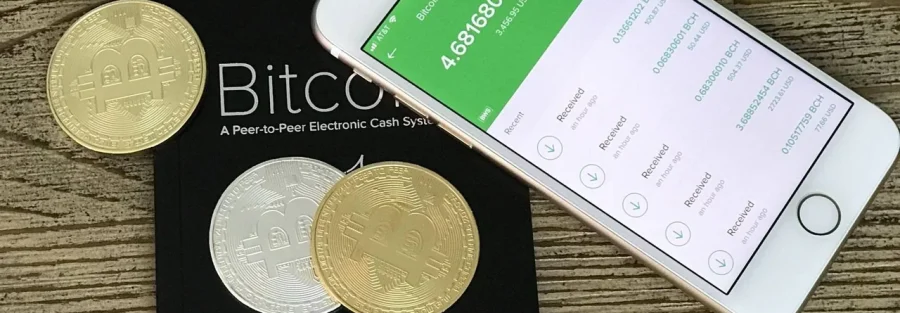
This is general information, not legal, tax or investment advice. Rules, licensed providers and developer policies change, so confirm every point with the developer, the provider’s regulator and a qualified adviser before you transfer anything. Nothing here guarantees returns, price growth or the outcome of a transaction. The photograph is an illustration only.
FAQ
Can I buy property in Dubai with Bitcoin?
Yes, in practice, but not in the way the headline suggests. Reporting by Gulf News and Khaleej Times says crypto must be converted into dirhams through a licensed intermediary before the property is registered. Bitcoin can fund the purchase. It does not appear on the title deed. Whether you can pay at all depends on the developer or seller and on the payment provider they use.
Does the Dubai Land Department accept cryptocurrency directly?
I found no official statement that the Dubai Land Department (DLD) registers ownership in cryptocurrency. What the DLD published, on 6 July 2025, is a memorandum of cooperation with Crypto.com to develop a digital investment environment for virtual real estate assets and to explore digital currencies in the sector. That is a development programme, not a payment channel you can use for a normal purchase today.
Which developers accept crypto for Dubai property?
Press reports name several, including Damac, Nakheel and Ellington, and the two outlets I opened do not give identical lists. Acceptance is reported to be limited to selected projects, so ask the specific developer in writing. A name on a list in an article is not an offer to you, and it can change without notice.
Is buying Dubai property with cryptocurrency anonymous?
No. Khaleej Times reports that buyers go through know-your-customer and anti-money-laundering checks, and the conversion is done by a licensed provider that runs its own checks. Expect to prove who you are and how you earned or acquired the crypto. A clear paper trail is the fastest route through the process.
Do I pay tax in my home country when I spend crypto on property?
Often yes, but it depends on where you are tax resident. In the United Kingdom, for example, HMRC treats using cryptoassets to pay for goods or services as a disposal that can trigger Capital Gains Tax. Other countries have their own rules. Ask a tax adviser in your home country before you convert or transfer, not after.
What happens if the crypto price falls before I pay?
That depends on the contract. If the price is fixed in dirhams, a fall in the crypto price is your cost: you must send more coins to cover the same amount. If the contract fixes a crypto amount, the seller carries the risk. Decide who carries it before you sign, and write down the exact conversion time and rate.
Can an off-plan cancellation refund be paid back in crypto?
Do not assume so. Because the purchase is recorded in dirhams, a refund will normally be a dirham amount, which may be worth more or less in crypto terms than what you paid. Ask the developer which currency and account any refund would use before you commit. This is a contract question, so have a lawyer read the answer.
Your Next Step
Planning a purchase and want the payment route, the developer’s terms and your documents lined up before any crypto moves? Speak to us first. Our real estate advisory service team can help you compare options, test the contract terms and prepare the paper trail. You can also reach us through the contact page, and browse Dubai listings on MrRealEstate once your route is clear.