


Table of Contents
- Permanent Establishment UAE: The Short Answer
- What a Permanent Establishment UAE Means in the Corporate Tax Law
- Fixed Place Permanent Establishment UAE: Offices, Sites and Property
- Dependent Agent Permanent Establishment UAE
- What Does Not Create a Permanent Establishment UAE
- Employees, Visitors and Permanent Establishment UAE Risk
- Permanent Establishment UAE vs Branch vs Subsidiary
- What Tax a Permanent Establishment UAE Pays
- Registration and Records for a Permanent Establishment UAE
- Permanent Establishment UAE Self-Test Checklist
- Limits of This Article
- FAQ
- Your Next Step
Permanent Establishment UAE: The Short Answer
A foreign company can owe UAE corporate tax without ever forming a UAE company. The trigger is a permanent establishment UAE tax presence, and founders often create one by accident: a leased office, a long project, or a local representative who signs deals.
Under Article 14 of the Corporate Tax Law, a permanent establishment UAE exists in two main cases. The first is a fixed or permanent place in the country through which the foreign company conducts its business, wholly or partly. The second is a person who habitually exercises authority to conduct business on its behalf.
In practice I group the triggers into five. A place of management, an office or branch, a factory or workshop, real property, and a building or installation project lasting more than six months all count as fixed places. The fifth trigger is the dependent agent. If one of the five applies, the profits attributable to that presence are taxable in the UAE.
This guide is for foreign founders and CFOs testing the market. It explains each test, the exclusions, how a permanent establishment UAE differs from a branch or subsidiary, and what registration and records follow. Section by section, you can check where your own setup stands.
What a Permanent Establishment UAE Means in the Corporate Tax Law
The UAE taxes a non-resident person in two ways. Under Article 12, a non-resident pays corporate tax on income attributable to its permanent establishment in the State. It also pays on State Sourced Income that is not attributable to a permanent establishment. The source is the Federal Decree-Law No. 47 of 2022 on the Taxation of Corporations and Businesses.
The practical difference matters. A non-resident that only earns UAE-sourced income, with no permanent establishment UAE presence and no other nexus, does not need to register for corporate tax, according to KPMG’s summary of the registration timelines. A non-resident with a permanent establishment does need to register, file and pay.
Article 11(4) then treats a non-resident with a permanent establishment as a taxable person in its own right. That is why the question is not academic. Once the permanent establishment UAE test is met, the foreign company is inside the corporate tax system, with returns, records and penalties.
The Federal Tax Authority describes two broad types on its Federal Tax Authority’s permanent establishment page. These are the fixed place permanent establishment and the dependent agent permanent establishment. The sections below follow that split.
Fixed Place Permanent Establishment UAE: Offices, Sites and Property
Article 14(1)(a) says a non-resident has a permanent establishment where it has a fixed or permanent place in the State through which its business, or any part of it, is conducted. Article 14(2) lists what a fixed place includes.
- A place of management, where management and commercial decisions are in substance made.
- A branch or an office.
- A factory or a workshop.
- Land, buildings and other real property.
- Installations for exploring or extracting natural resources, including mines, wells and quarries.
- A building site, construction project or place of assembly or installation, including supervisory activities, lasting more than six months.
Three points deserve attention. First, the list is not limited to owned space. A rented desk used regularly for your business can qualify. Second, “place of management” looks at where real decisions are made, not at where the paperwork is filed. That links directly to the effective management issues in our guide to running a UAE company from abroad.
Third, the six-month test counts related parties. Article 14(2)(i) adds connected activities carried out at the same site by related parties of the foreign company. Separate sites and projects are also added together. A group that hands one contract to three affiliates does not reset the clock.
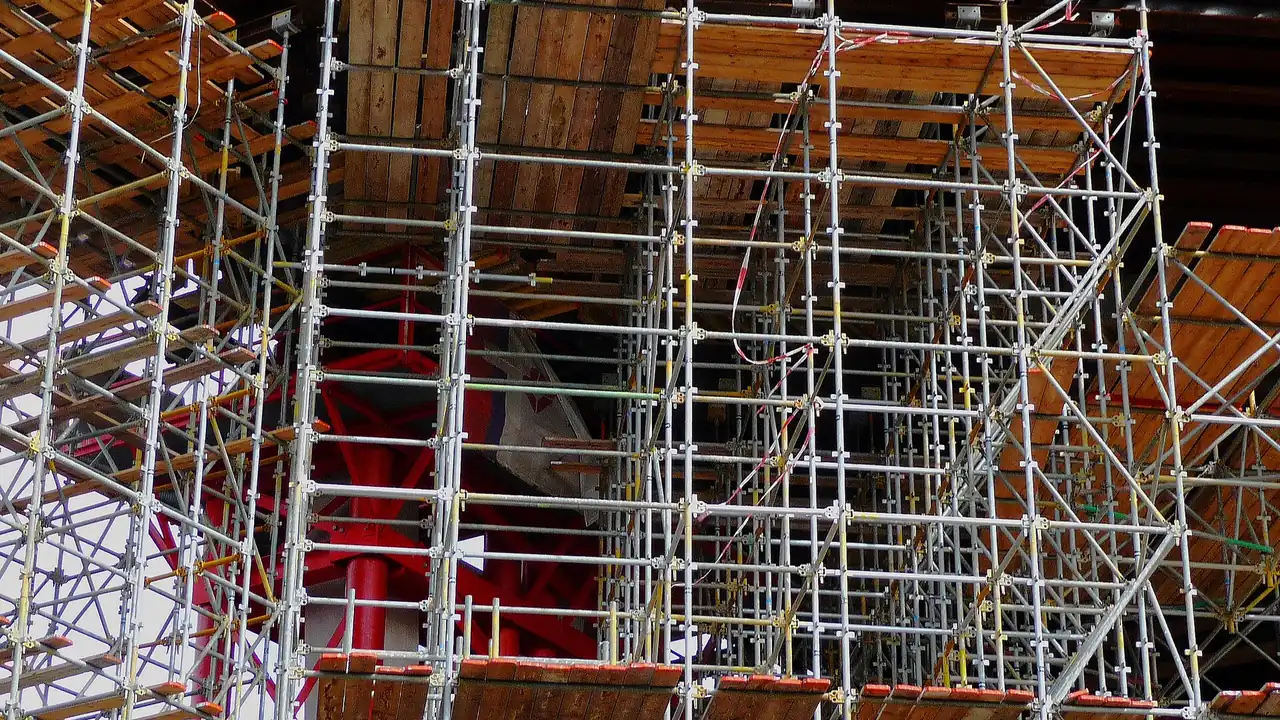
A short example. A European engineering firm sends staff to install equipment at a Dubai plant. The installation and the supervision run for seven months. The firm has no office and no licence. On the text of Article 14(2)(i), the project is a permanent establishment UAE site from the point the six-month line is crossed, and the profits attributable to it become taxable.
Dependent Agent Permanent Establishment UAE
A foreign company can have no premises and still have a permanent establishment UAE exposure. Article 14(1)(b) catches a person who has and habitually exercises authority to conduct business in the State on its behalf.
Article 14(5) sets the test. A person is treated as having that authority if they habitually conclude contracts on behalf of the foreign company. The same applies if they habitually negotiate contracts that the foreign company then concludes without material modification. A “sales manager” who agrees price and terms, with head office rubber-stamping the result, fits the second limb.
There is an exception. Article 14(6) says the rule does not apply to a genuinely independent agent acting in the ordinary course of its own business. But the exception is narrow. It is lost if the agent acts exclusively or almost exclusively for the foreign company, or cannot be considered legally or economically independent from it.
So a distributor buying and reselling for its own account is a different case from a commission agent who works for one principal. Contracts, exclusivity, who sets prices and who carries inventory risk all matter. My view is that the “almost exclusively” wording makes single-client agents the highest risk group for a permanent establishment UAE claim.
Article 15 adds a specific rule for investment managers acting for certain funds, treating them as independent agents when conditions are met. Fund managers should read it separately.
What Does Not Create a Permanent Establishment UAE
Article 14(3) removes a fixed place from the permanent establishment UAE net if it is used solely for one of these purposes.
- Storing, displaying or delivering goods that belong to the foreign company.
- Keeping a stock of goods only so another person can process them.
- Purchasing goods or collecting information for the foreign company.
- Any other preparatory or auxiliary activity.
- A combination of the above, if the overall activity remains preparatory or auxiliary.
The word “solely” does the work. A warehouse that only stores your stock is outside the net. A warehouse from which staff also take orders, negotiate prices and invoice customers is not. A purchasing office is fine; a purchasing office that also sells is not.
Article 14(4) is an anti-fragmentation rule. If you or a related party carry on business at the same place, or at another place in the UAE, and the combined activity is not preparatory or auxiliary, the exclusions fall away. Splitting one operation across several entities to stay under the line will not work if together they form a cohesive business.
Employees, Visitors and Permanent Establishment UAE Risk
People create the most day-to-day uncertainty. Article 14(7) lets the Minister set conditions under which the mere presence of a natural person does not create a permanent establishment UAE exposure. Two situations are named.
The first is presence caused by a temporary and exceptional situation. Ministerial Decision No. 83 of 2023 sets the conditions, as summarised by Afridi & Angell’s note on Ministerial Decision No. 83 of 2023. The situation must be beyond the person’s control and unforeseeable. The person must not intend to stay once it ends. The company must not already have a permanent establishment UAE presence.
The second is an employee whose activities in the UAE are not part of the company’s core income-generating activities, provided the company has no State Sourced Income. A finance employee working remotely from Dubai for a foreign group is the typical example, though each case needs checking against the conditions.
Outside those two cases, a person who works from a home office or a co-working desk can contribute to a fixed place or a dependent agent finding. The result depends on what they do, not on their visa. A founder who negotiates and signs deals from Dubai for a foreign company deserves a documented analysis.
One caution. Some commentary describes a separate “183-day service permanent establishment” in UAE law. I could not find that rule in Article 14 or on the Federal Tax Authority’s page, so I do not rely on it. Check your treaty, though, because treaties can contain service tests of their own.
Permanent Establishment UAE vs Branch vs Subsidiary
The three terms get mixed up. A branch and a subsidiary are legal forms you choose. A permanent establishment is a tax concept that can arise whether or not you chose anything.
A UAE branch is a fixed place by definition, because Article 14(2)(b) lists a branch. A registered branch of a foreign company is therefore a permanent establishment UAE taxpayer, and the foreign company is liable for it. A subsidiary is a resident juridical person with its own tax return and its own liability. The parent is not taxed on the subsidiary’s profit as a permanent establishment.
| Feature | Permanent establishment | Branch | Subsidiary |
|---|---|---|---|
| What it is | Tax concept | Legal form, same legal person as the parent | Separate company |
| Needs a licence | No | Yes | Yes |
| Who is taxed | The foreign company, on attributable profit | The foreign company, on branch profit | The subsidiary, on its profit |
| Parent liability | Foreign company is directly liable | Parent is directly liable | Limited to the subsidiary, subject to the contract |
| Can still create a PE for the parent | Not applicable | Not applicable | Yes, if it acts as a dependent agent or is run as the parent’s office |
A subsidiary does not remove the risk completely. If it habitually concludes the parent’s contracts, or the parent’s managers run the parent’s business from the subsidiary’s offices, the parent can have a permanent establishment as well. Our comparison of branch office vs subsidiary covers liability, licensing and exit in more depth.
For many founders the cleaner answer is to stop relying on an accidental presence and set up a UAE entity properly. A licensed entity gives you a known tax position, a bank account and a legal home for your staff. Our business setup service can help you choose between a branch and a subsidiary.
What Tax a Permanent Establishment UAE Pays
Corporate tax applies at 9% on taxable income above the Cabinet-set threshold of AED 375,000, with 0% below it. The tax base is the profit attributable to the permanent establishment UAE operation, not the foreign company’s worldwide profit. Attribution is the hard part.
The law gives a useful anchor. Article 34 applies the arm’s length principle to transactions between related parties, and the definition of related parties includes a person and its permanent establishment. So dealings between head office and the UAE presence, such as service charges, shared costs and goods transfers, should be priced as if between independent parties.
This is where documentation matters. If head office provides IP, management or financing to the permanent establishment UAE operation, the charges need support. Our guide to UAE transfer pricing explains the principle, the documentation rules and what the Federal Tax Authority expects to see.
Two further points. A non-resident that earns income from UAE immovable property has a nexus under Cabinet Decision No. 56 of 2023, according to KPMG, which is a separate route to registration. And a free zone licence does not remove the question; the qualifying income tests are a different topic.
Registration and Records for a Permanent Establishment UAE
Registration is the step most foreign companies miss. Federal Tax Authority Decision No. 3 of 2024 sets the timelines for non-residents. If the permanent establishment existed before 1 March 2024, the deadline is nine months from the date it came into existence. If it arose later, the deadline is six months.
The deadline is for submitting the application, not for receiving a tax registration number. Missing it carries an AED 10,000 administrative penalty, as set out in KPMG’s summary of the registration timelines. KPMG also notes it was not clear how the “date of existence” of a fixed place is fixed: the day activities began, or the day a six-month threshold was passed. Take the earlier, safer date unless advice says otherwise.
After registration, the obligations follow the usual corporate tax cycle. Our corporate tax registration deadline checklist walks through the first steps.
- File a tax return within nine months of the end of the tax period (Article 53).
- Keep records for seven years after the end of the tax period (Article 56).
- Prepare financial statements for the permanent establishment UAE operation, as if it were a standalone business.
- Support related-party charges between head office and the UAE presence.
Financial statements are the practical challenge. A branch or office of a foreign company often shares its accounting with head office. The UAE operation needs its own ledger, bank records, contracts and cost allocations so profit can be attributed and defended. Ask your accountant whether audit requirements apply to you.
Permanent Establishment UAE Self-Test Checklist
Use these questions before you rent space, send staff or appoint a local representative. A “yes” does not prove a permanent establishment UAE exists, but it means you should take advice.
| Question | If yes |
|---|---|
| Do we rent, own or regularly use an office, desk, workshop or warehouse that does more than store goods? | Possible fixed place; check Article 14(2) and 14(3) |
| Are real management or commercial decisions made by someone sitting in the UAE? | Possible place of management |
| Does a project, site or installation run, or will it run, beyond six months, including related parties? | Building site test is met |
| Does anyone in the UAE sign, or negotiate and effectively settle, contracts for us? | Possible dependent agent |
| Does our agent work only or almost only for us? | Independent agent exception may be lost |
| Do we hold a treaty residency certificate from our home country? | Treaty may limit the outcome; keep it on file |
| Have we recorded the date any of these facts began? | Needed for the registration deadline |
If the facts point to a permanent establishment UAE position, you have three options. Restructure the activity so it stays preparatory, move decisions and contract authority out of the country, or accept the presence, register and report it properly. Option three costs less than a late penalty followed by an audit.
Limits of This Article
I read Articles 11 to 15, 34, 53, 56 and 66 of the consolidated Corporate Tax Law as published by the Ministry of Finance in January 2026, the Federal Tax Authority’s permanent establishment page, and secondary summaries of the registration timelines and Ministerial Decision No. 83 of 2023. I did not read the Federal Tax Authority’s decision text itself.
I did not cover profit attribution methods in detail, individual treaty definitions or audit thresholds. Where I could not confirm a rule, such as the claimed 183-day service test, I say so. This is general information, not legal or tax advice. Have a UAE-qualified adviser review your facts before you decide.
FAQ
What is a permanent establishment in the UAE?
A permanent establishment UAE is a taxable presence of a foreign company in the country. Under Article 14 of the Corporate Tax Law it arises from a fixed place of business, or from a person who habitually exercises authority to conduct business on the foreign company’s behalf. Profits attributable to it are taxed at UAE corporate tax rates.
Does a UAE office automatically create a permanent establishment?
Usually, yes. An office, branch, factory or workshop is listed as a fixed place in Article 14(2). The exception is a place used solely for storing or delivering goods, buying goods, collecting information or other preparatory or auxiliary work. A sales office or a management office is not preparatory, so it normally counts.
How long can a construction project run before it becomes a permanent establishment?
A building site, construction project or installation, including related supervisory activities, creates a permanent establishment when it lasts more than six months. Activities of related parties at the same project are counted together with yours. Several sites or projects can also be added together, so splitting a contract does not reset the clock.
When does a sales agent in the UAE create a permanent establishment?
A person creates one when they habitually conclude contracts for you, or habitually negotiate contracts that you sign without material changes. A genuinely independent agent, acting in the ordinary course of their own business, is outside the rule. An agent working exclusively or almost exclusively for you is not treated as independent.
Is a UAE subsidiary a permanent establishment of its foreign parent?
No, not by itself. A subsidiary is a separate taxable person with its own return. It can still create a permanent establishment for the parent if it habitually concludes or negotiates the parent’s contracts, or if the parent runs its business from the subsidiary’s premises. Each case turns on facts.
When must a permanent establishment register for UAE corporate tax?
Under Federal Tax Authority Decision No. 3 of 2024, the deadline is six months from the date the permanent establishment exists, or nine months if it already existed before 1 March 2024. Missing it carries an AED 10,000 administrative penalty. The deadline applies to submitting the application, not to receiving the registration number.
Can a tax treaty stop a UAE permanent establishment?
It can narrow it. Article 66 of the Corporate Tax Law gives a treaty in force priority over the domestic rules to the extent they conflict. Treaty definitions, such as the length of a construction site test, can differ from Article 14. You must read the treaty with your home country and usually hold a tax residency certificate.
Your Next Step
Worried that your UAE office, project or local representative has already created a permanent establishment UAE position? Speak to us before the registration clock runs out. Our business setup service helps you compare a branch, a subsidiary and a lean structure, and set up the one that fits. You can also reach us through the contact page.